Tools That Work in the Real World
The tools in this workshop are designed for one purpose: to be used every week by someone running a real business, not reviewed once and forgotten. Paper or phone — you choose.
The Right Tool Is the One You'll Actually Use
We've seen too many "systems" that get set up during a workshop and abandoned by the following week. The reason is almost always the same: the tool didn't fit how the person actually works.
Some managers prefer to open a notebook at their desk every Monday morning. Others want to update a spreadsheet on their phone while waiting for a delivery. Both are valid. Both work. We support both equally.
What matters is that your cash map gets updated every week — not that it's updated using a specific technology.
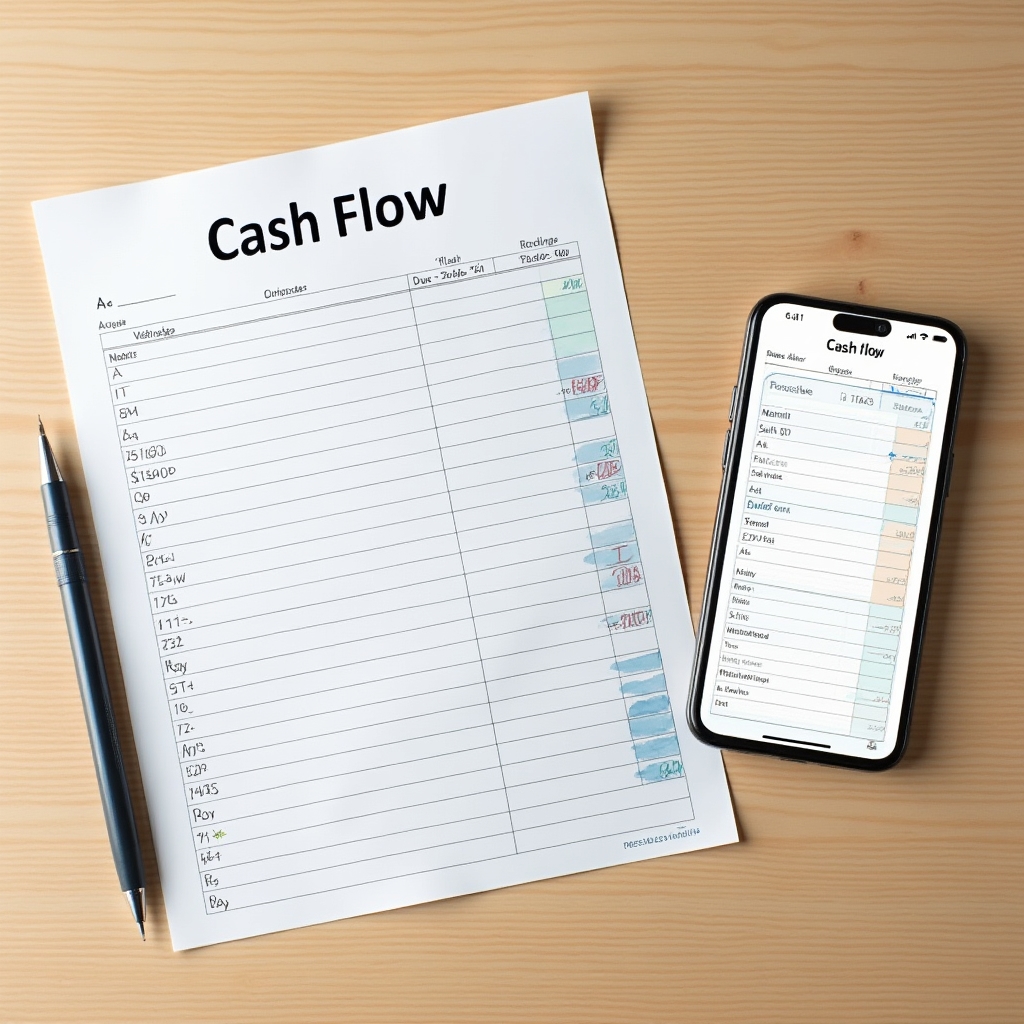
Paper Track & Digital Track
Every participant chooses one track during the workshop. Both tracks produce the same cash map — just in different formats.
Paper Track
For managers who prefer physical worksheets. Everything runs on printed forms — no phone or computer needed after the workshop.
Digital Track
For managers who prefer updating on their phone or computer. A simple spreadsheet — no special software, no subscription.
Same Output, Different Format
Both tracks produce an identical cash map. The only difference is the medium. Your weekly routine will look different but the information you see every Monday morning will be the same.
Switch Anytime
You receive both versions during the workshop. If you start with paper and later want to move to digital — or vice versa — everything transfers directly.
15 Minutes Per Week
The weekly update process is designed to take no more than 15 minutes. If it takes longer, something is wrong with how it's set up — and we'll help you fix it.
The Information You'll See Every Week
Your completed cash map gives you a specific set of information that most managers have never seen organized in one place before.
Daily Cash Position
How much cash you expect to have available at the end of each day of the week — accounting for all entries and exits scheduled for that day.
Gap Days
The specific days where your projected balance goes below zero — or below the minimum you need to operate comfortably. Visible before they happen.
Rhythm Patterns
Over several weeks of updates, patterns emerge. You'll see which days consistently create pressure and which days consistently give you breathing room.
Negotiation Leverage
When you can see your cash rhythm clearly, you can identify specific adjustments — moving a supplier payment by three days, asking a customer to pay on Thursday instead of Friday — that eliminate gaps without changing your sales volume.
Forward Visibility
A simple projection for the following week based on your typical patterns. Not a forecast — just enough visibility to avoid being caught off guard by something you could have seen coming.
Anomaly Detection
When something unusual happens — a late payment, an unexpected expense — your map makes it immediately visible against your normal baseline. You see the impact before it becomes a crisis.
What Using the Tool Actually Looks Like
Every Monday morning — or Sunday evening if you prefer — you spend 15 minutes updating your map. You enter the actual cash that came in the previous week, record any payments that went out, and look at what the coming week looks like.
If Thursday shows a gap, you have Monday, Tuesday, and Wednesday to do something about it — collect a payment early, hold off on a discretionary expense, or call a supplier to adjust timing.
That's the whole system. Simple, repeatable, and built around your specific business — not a generic template.

Get These Tools at the Workshop
All tools are included in the workshop. You leave with everything configured and ready to use. Contact us for upcoming dates in Xalapa.